The Tatras, or the rediscovery of wonder through unfamiliarity
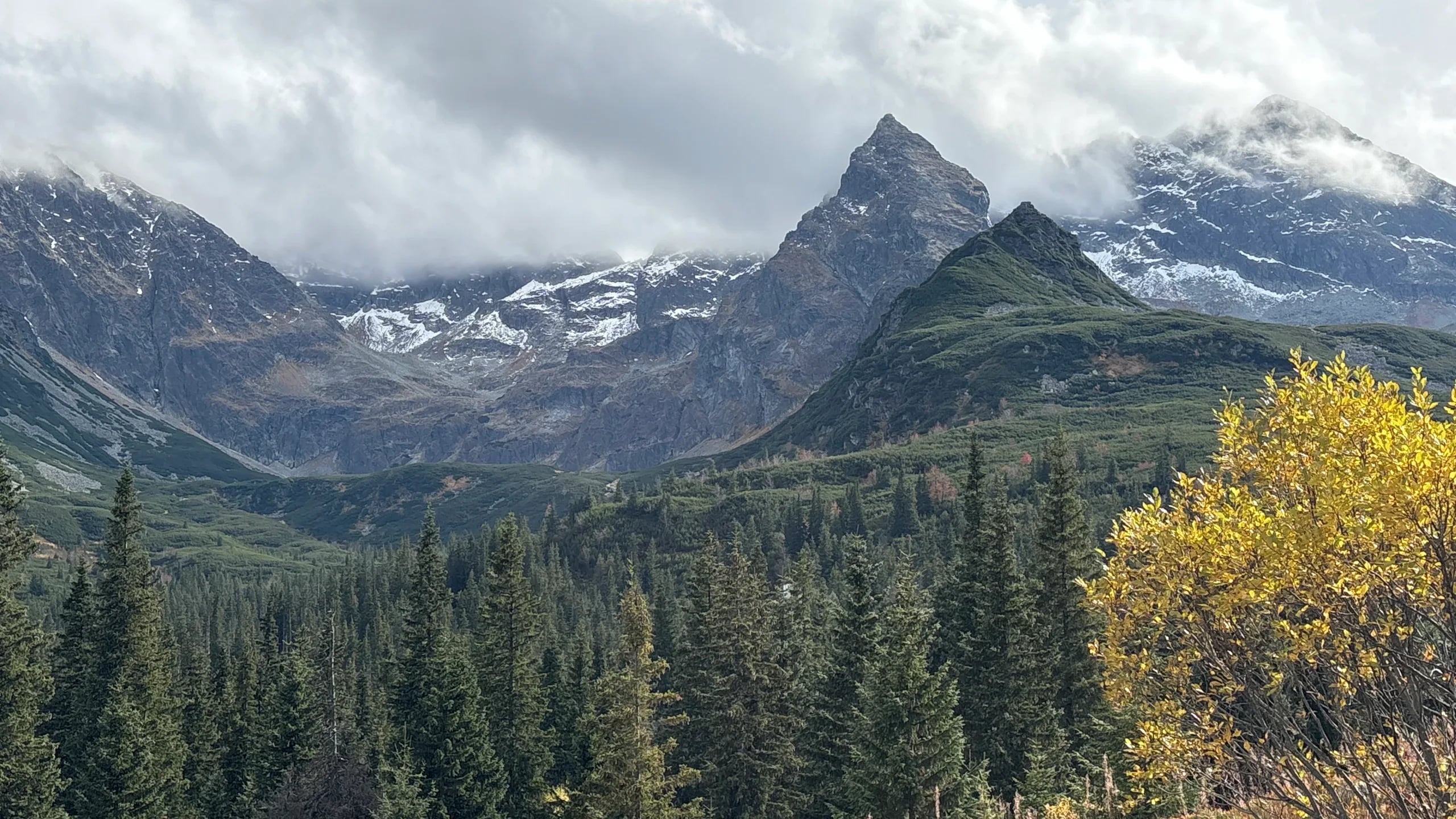
The Tatras rise at the border between Poland and Slovakia. Marked by jagged peaks, immense forests and a rich flora and fauna, they form the highest portion of the Carpathians.
The first time I heard about the Tatras was while doing my geography homework in primary school. I was studying the mountain ranges of Europe in an atlas (one of those wonderful tools that nobody uses anymore) when my gaze fell upon a long mountain range stretching between Poland and central Romania - the Carpathians. I remember asking my mother what kind of mountain range that was and her replying to me with a note of surprise in her voice "The Carpathians? Those are really wild mountains, far, far away". My mother had never been there, but this sentence sparked my curiosity exponentially. So I dug deeper, and I soon discovered that the highest subrange, within the Carpathians, were the Tatras of Poland and Slovakia, and needless to say, dreamt of traveling there.
20 years later, I found myself on the outskirts of Krakow, sitting on a bus headed, for the mountains. The dream had finally come true.
I was welcomed in Zakopane, the main town on the Polish side of the range, by a snow storm. Since I tend to instinctively compare new mountains ranges with the one I grew up in, the Alps, I was impressed by this display of the climate's harshness: I was at only 800 m of altitude and it was only early October and it was already snowing.
The next day I set out on my first hike in heavy fog, when I was confronted with another novelty: all the signs were in Polish, something which I obviously expected but that still surprised me as I was used to toponyms in Italian, German or French - but not in Polish or in a Slavic language. This highlighted a problem I hadn't considered then and which I had never had before: the difficulty to remember or even pronounce the name of a peak, a valley or a meadow. I then proceeded past the par rangers hut, past the danger panels about bears (not a novelty for me having hiked in Canada), past a small wooden pedestrian bridge and into the forest. The adventure had began.
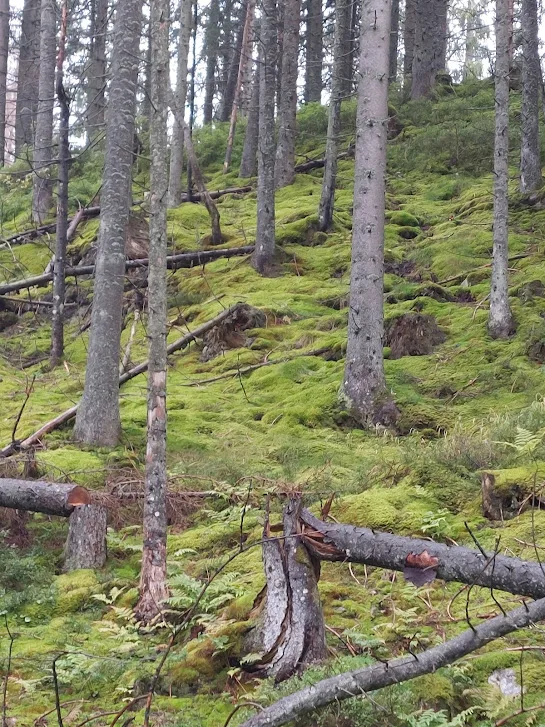
With every step, I started noticing things different from the mountains back home. The forest felt immense: it was thick, it was dark, its trees stood dozens of meters tall above the ground; everywhere I looked, there were only spruces. Thousands of them, with the occasional rowan or fir to add change to the evergreen monotony. Large areas were literally carpeted in moss, a layer so thick and green, to mesmerize my gaze.I had never seen a flora like that in the Alps (and if you ever been to the Bernese Oberland you know how lush those valleys can be). It all looked nordic, like the wetlands of Finland and Sweden, but with an alpine feeling to it.
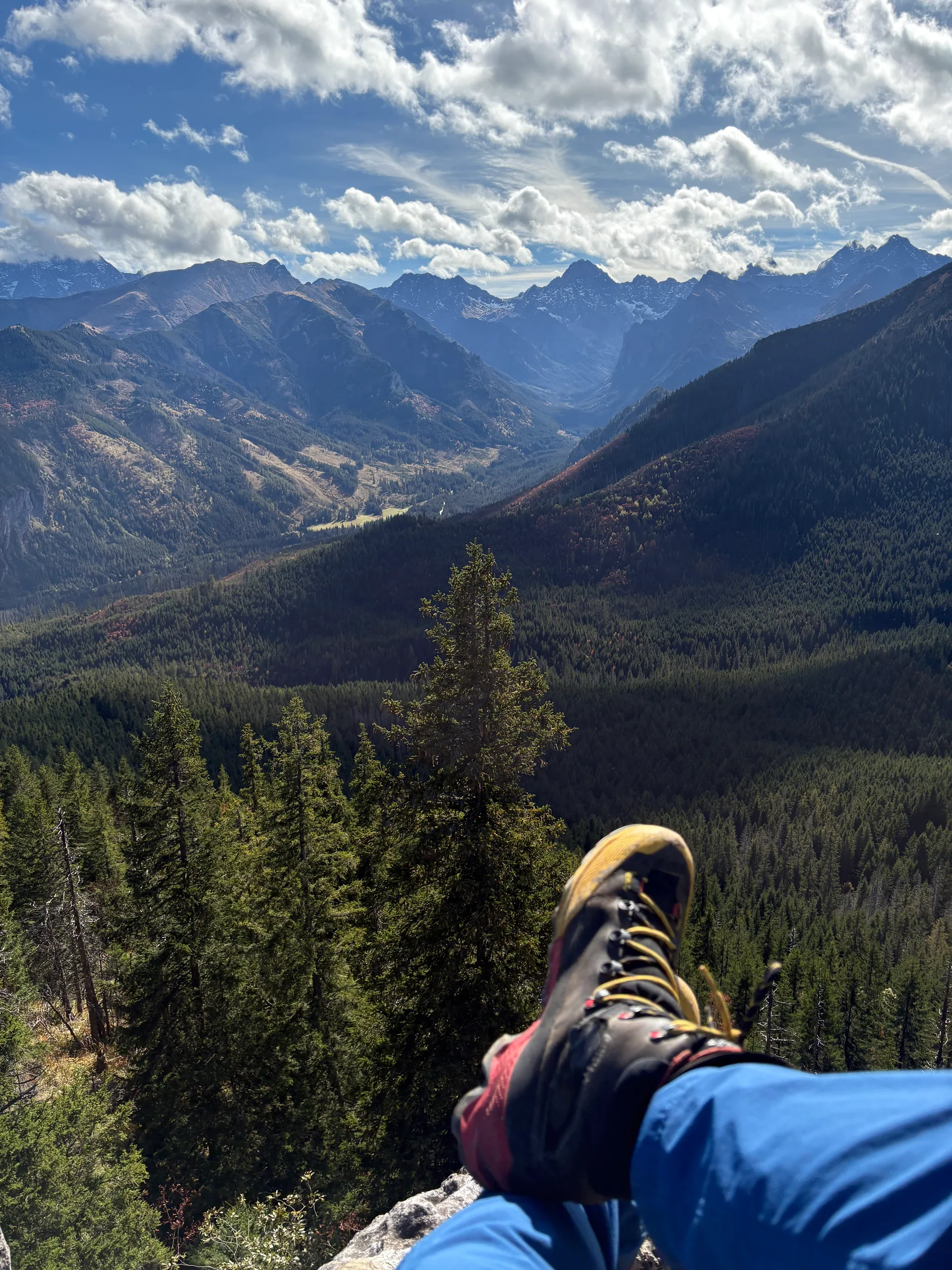
As I progressed upwards, the wood thinned out and I found myself on a ridge that offered my first glimpse of Giewont, a mountain of symbolic importance for the Poles. The recent snowfall had made it unclimbable so I would have had to wait until the following summer to claim its peak. I soon reached my first destination, the famous Hala Gasienicowa meadow, at 1450 m of altitude (it took me days to memorize that name). It was a place of such beauty that it is hard to describe: a wide valley opened up to the south and south-east; half of it was a meadow interspersed with glacial lakes, the other half was a thick forest of spruce and pine that ended at the foot of towering mountains.
Each of these peaks looked like a spire, and every spire was connected by a sharp ridge-line , which formed a majestic crown.
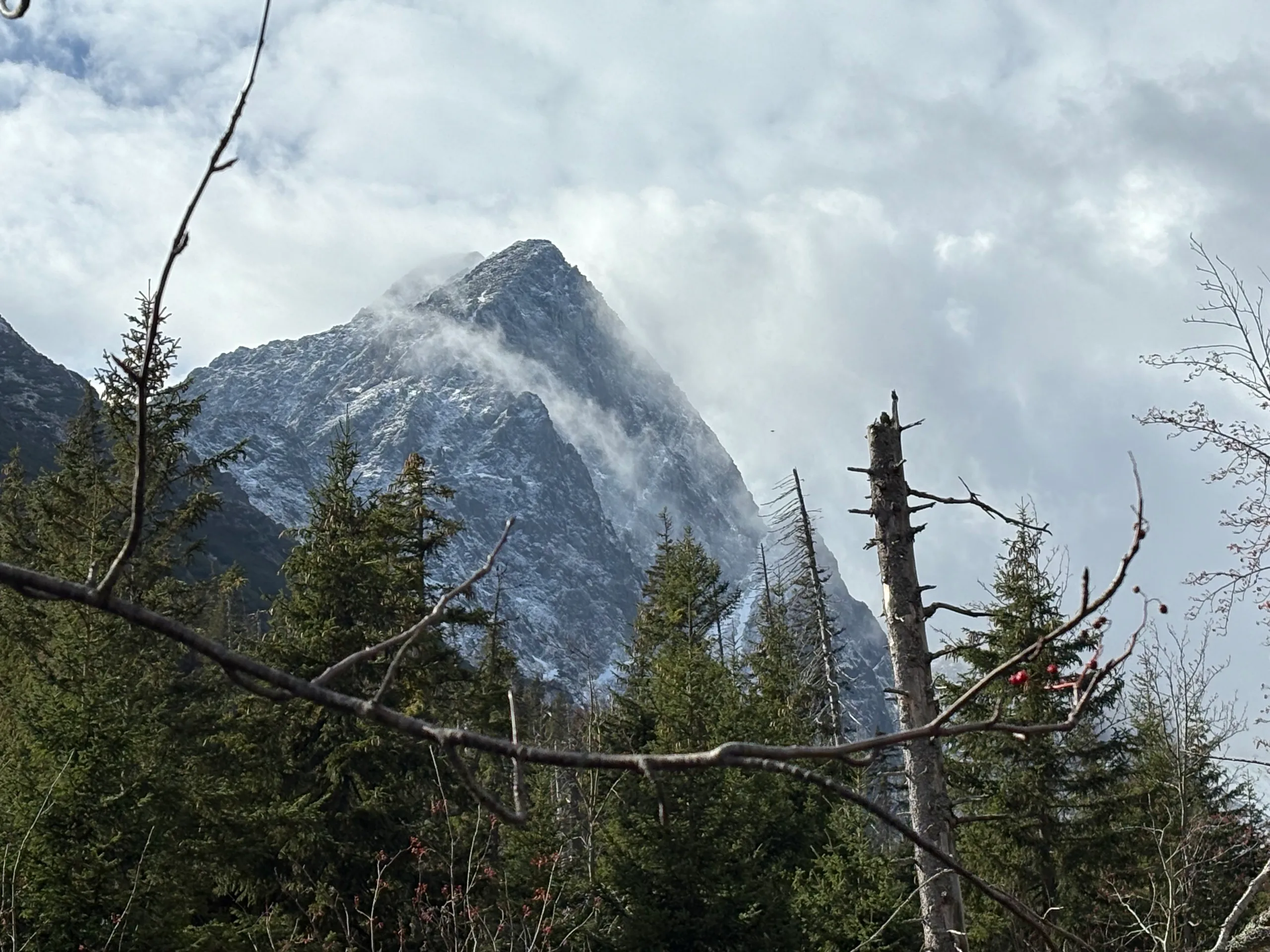
The tree-line sat much lower than in the Alps, thus making the surrounding peaks look higher, and cold winds were whipping the rocky mountainsides and casting around snow; clouds were moving fast. I was in awe. It could almost have been Austria or Switzerland. And yet, something was missing: the villages, the groomed pastures, the familiar signs of human habitation. Here, there were only forests, rocks and sky.
The trail lead me to a lake, the Czarny Staw and from there onto a lofty ridge where I spotted some chamois in the distance. The chamois, at last, looked very similar to the ones in the Alps and their familiar shape was a welcomed sight amidst all the novelty that encircled me. During the whole hike, I kept an eye out for bears, but didn't see any - and when I finally saw some wildlife, I was glad it was just some harmless mountain goats.
An hour later, I made it safely to Kasprowy Wierch, onto the long, wind-swept ridgeline drawing the border between Poland and Slovakia.
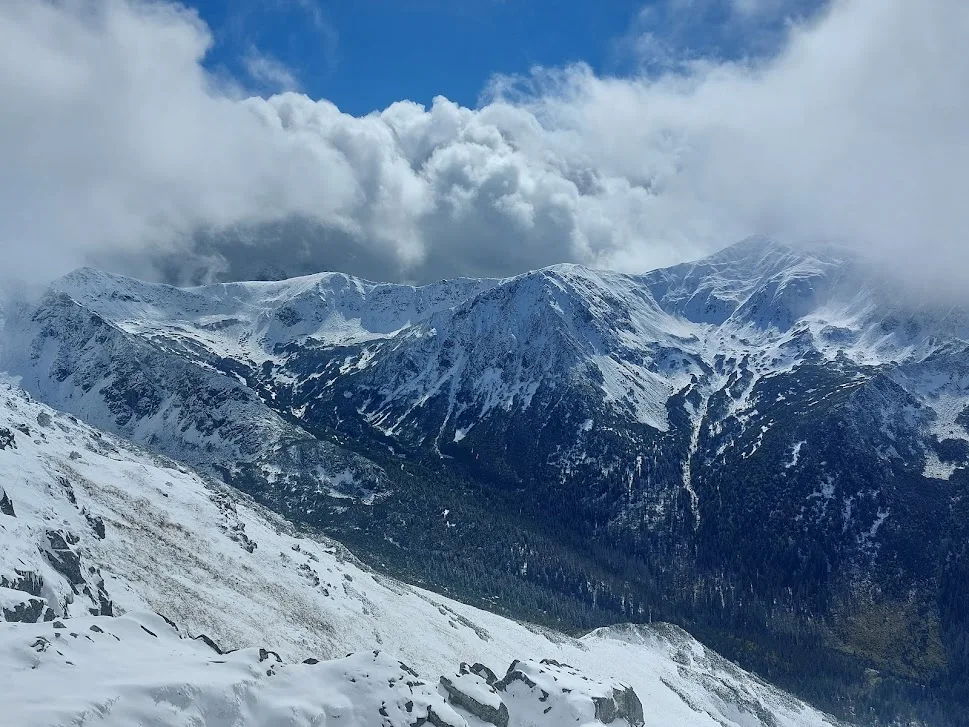
Here I rewarded myself with a break at the mountain station built atop this peak. As I sat there drinking my tea, listening to conversations in languages I couldn't understand (there were Poles, Slovaks, Lithuanians and who knows what else) and looking at the unfamiliar faces of those people, I thought back to that afternoon, twenty years earlier, when my mother had first told me about the Carpathians. "Those are really wild mountains, far, far away," she had said. Her words resonated with what I saw around me and felt inside me. I realized that hiking in the Tatras is not a regular outdoor experience; it's a special one, where one can rediscover that treasure that we all lose as we get older and build our comfort zone: the sense of wonder for the unknown.